
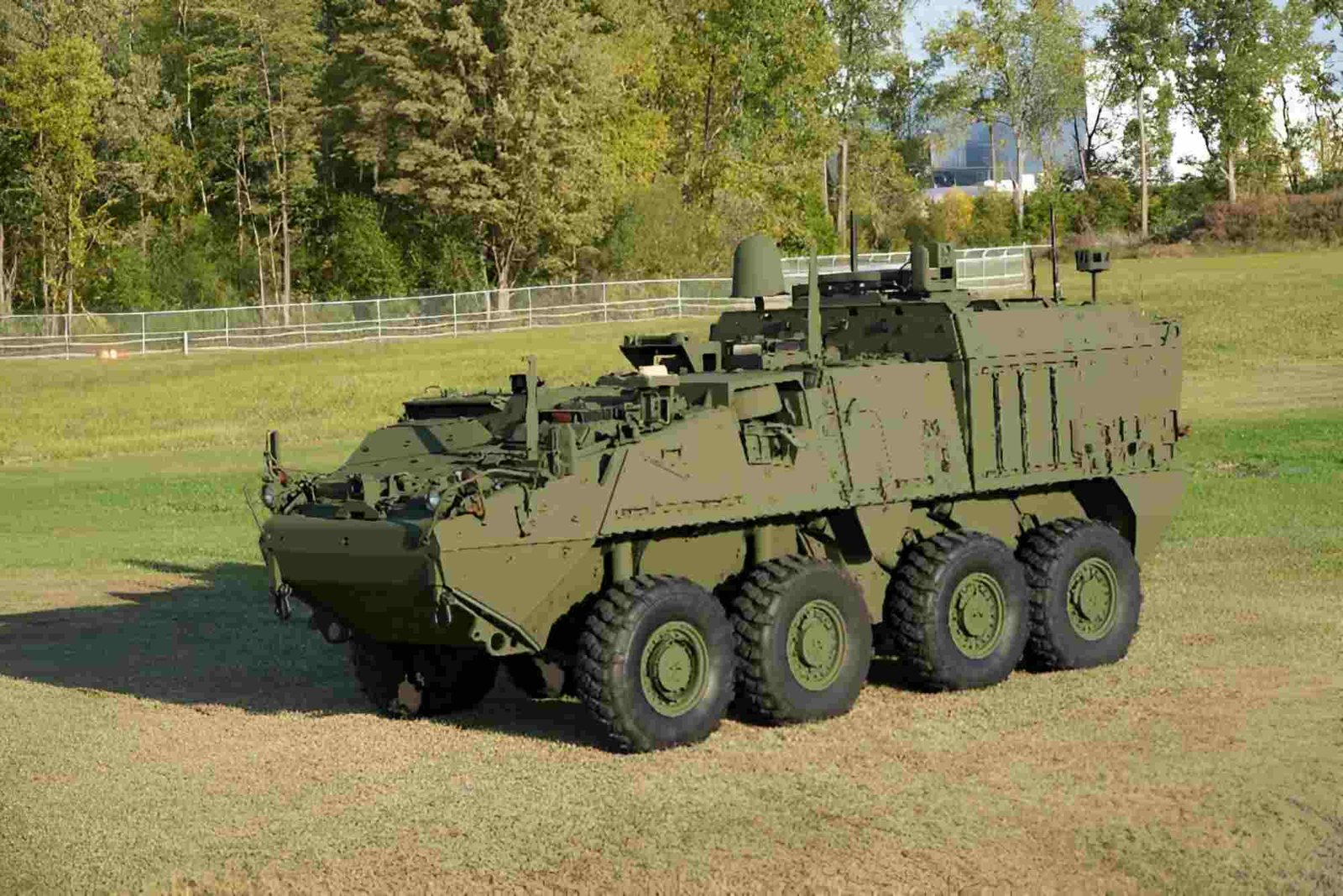
EDGE Unveils Next-Gen Armoured and Robotic Combat Vehicles at IDEX 2025
In February 2025, the defence industry witnessed a landmark moment when EDGE Group, the UAE-based advanced technology and defence conglomerate, unveiled a new generation of land platforms at IDEX 2025. This showcase marked a clear pivot toward hybrid, autonomous, and high-mobility systems in the land-domain, and set the tone for future combat vehicles. The launch underscored how nations and defence manufacturers were shifting from legacy platforms toward smarter, networked architectures.
A Clear Signal of Change
EDGE Group presented its new line-up at the Abu Dhabi National Exhibition Centre from 17 to 21 February. Among the highlights were three new variants of the AJBAN MK2 series produced by NIMR Automotive, the HAVOC 8×8 Robotic Combat Vehicle (RCV) developed by Milrem Robotics, and the RABDAN 8×8 Recovery Vehicle from the Al Jasoor joint-venture. Each of these platforms conveyed a distinct purpose: modular armoured mobility, autonomous combat operations, and field-resilient recovery support.
This wasn’t simply about launching a “new vehicle.” It was a strategic moment that reflected how land-systems were evolving to meet today’s multi-domain demands: faster, smarter, survivable, and connected.
Modular Armoured Mobility: AJBAN MK2 Variants
The AJBAN MK2 platform debuted three fresh variants specialised for distinct mission sets. These vehicles were engineered for enhanced protection, mobility, and modular mission-fit—key attributes in modern theatres of operation. At IDEX 2025, this new family signaled an evolution away from one-size-fits-all wheeled armoured vehicles toward tailored configurations.
What made the AJBAN MK2 series stand out was the emphasis on modularity and adaptability: plug-and-play mission modules, scalable protection options, and the ability to respond to asymmetric threats. For forces operating in the Middle East and beyond—where terrain, threat-levels and mission profiles vary widely—the AJBAN MK2 offered a flexible answer.
Autonomous Firepower: HAVOC 8×8 Robotic Combat Vehicle
Perhaps the most futuristic piece on display was the HAVOC 8×8 Robotic Combat Vehicle from Milrem Robotics, majority-owned by EDGE. At IDEX 2025, this unmanned ground vehicle (UGV) marked a major leap in how land-combat platforms could operate: hybrid electric propulsion, autonomous or remote operations, large-calibre weapon integration, and extended range.
The HAVOC was framed not just as a robotic novelty, but as a battlefield asset designed for real missions: high-speed manoeuvre, deep-reach operations, and reduced crew risk. By showcasing it alongside more conventional platforms, EDGE emphasised that autonomous systems were becoming central—not niche—to land warfare.
Battlefield Support: RABDAN 8×8 Recovery Vehicle
One of the less glamorous but highly critical platforms to appear at the show was the RABDAN 8×8 Recovery Vehicle, built by Al Jasoor (a joint venture between EDGE and OTOKAR). With a 720 HP engine, heavy-duty winch, crane and advanced mobility, the RABDAN underscored that the support side of operations—recovering damaged systems, maintaining tempo, ensuring sustainment—is equally vital in modern campaigns.
In a way, the RABDAN could be seen as emblematic of a broader shift: recognising that logistics, support and resilience are no longer afterthoughts—they are integral to operational design from the start.
Strategic Implications for the Region and Beyond
The unveiling at IDEX 2025 carried several broader implications:
- UAE as a producer, not just purchaser. EDGE’s portfolio and capability expansion signalled that the UAE was moving beyond being a buyer of defence gear, to a developer and exporter of advanced systems. The land-domain focus reinforced this ambition.
- Convergence of autonomy and traditional armour. By bringing together fully crewed platforms (AJBAN variants) with robotic ones (HAVOC) and support vehicles (RABDAN), we saw a holistic ecosystem rather than one-off technology demos. Land forces of the future will field mixed crews and uncrewed teammates.
- Export potential and collaboration. These platforms position EDGE and its partners to play more actively on the global stage, particularly in markets seeking next-gen solutions like Africa, Asia and the Middle East. The IDEX launch was a statement of intent.
- Focus on modularity and multi-mission readiness. The new vehicles are designed less as monolithic machines and more as adaptable systems: change the mission module, swap the weapon system, adjust protection levels. This flexibility is key amid shrinking budgets and evolving threats.
What This Means for End‐Users
For defence planners, procurement heads and operational commanders, several take-aways emerged from the IDEX 2025 launch:
- Reduced crew exposure. With systems like HAVOC, missions that once required human crews inside heavy armour can now be partially remote or autonomous—reducing risk while maintaining capability.
- Terrain-agnostic mobility. The eight-wheel drive 8×8 vehicles (AJBAN MK2, HAVOC, RABDAN) emphasise speed, ride quality and off-road reach, which is critical across desert, urban and mixed terrain.
- Lifecycle economy through modularity. Instead of buying a fixed-role vehicle and retiring it after ten years, users can adapt mission modules—hence extending platform life and offering cost-efficiency.
- Integrated support design. The inclusion of the RABDAN recovery vehicle highlights that recovery and sustainment are not merely maintenance tasks, but strategic enablers. Front-line units equipped with such support can maintain tempo and resilience.
The Legacy of IDEX 2025 and What Comes Next
While the event is in the past, its ripple effects continue. The vehicles unveiled will go through further integration, testing and export negotiations. The broader land-systems market has taken note: unmanned vehicles, hybrid propulsion, modular architecture—these are now baseline expectations rather than fringe experiments.
EDGE’s showcase at IDEX 2025 helps define a template for the future: a layered land-force architecture consisting of manned armoured vehicles, unmanned combat platforms, and dedicated support units—all networked, adaptable, and mission-driven.
Conclusion
The unveiling by EDGE Group at IDEX 2025 was far more than a product launch. It represented a shift in how nations conceive land warfare and defence industrial strategy. By presenting the AJBAN MK2, HAVOC 8×8 RCV and RABDAN 8×8 Recovery, EDGE demonstrated that modern land operations are evolving toward a landscape of autonomy, modularity and adaptive deployment.
For the UAE and its defence ecosystem, it was a milestone: the move from regional player to a producer of next-gen land platforms. For global defence audiences, it raised the bar for industry peers: remain relevant or be superseded by systems designed for tomorrow’s battlefield.
In short, what took place in Abu Dhabi in February 2025 will be remembered as a landmark moment—when the future of land warfare became just a little more tangible.