
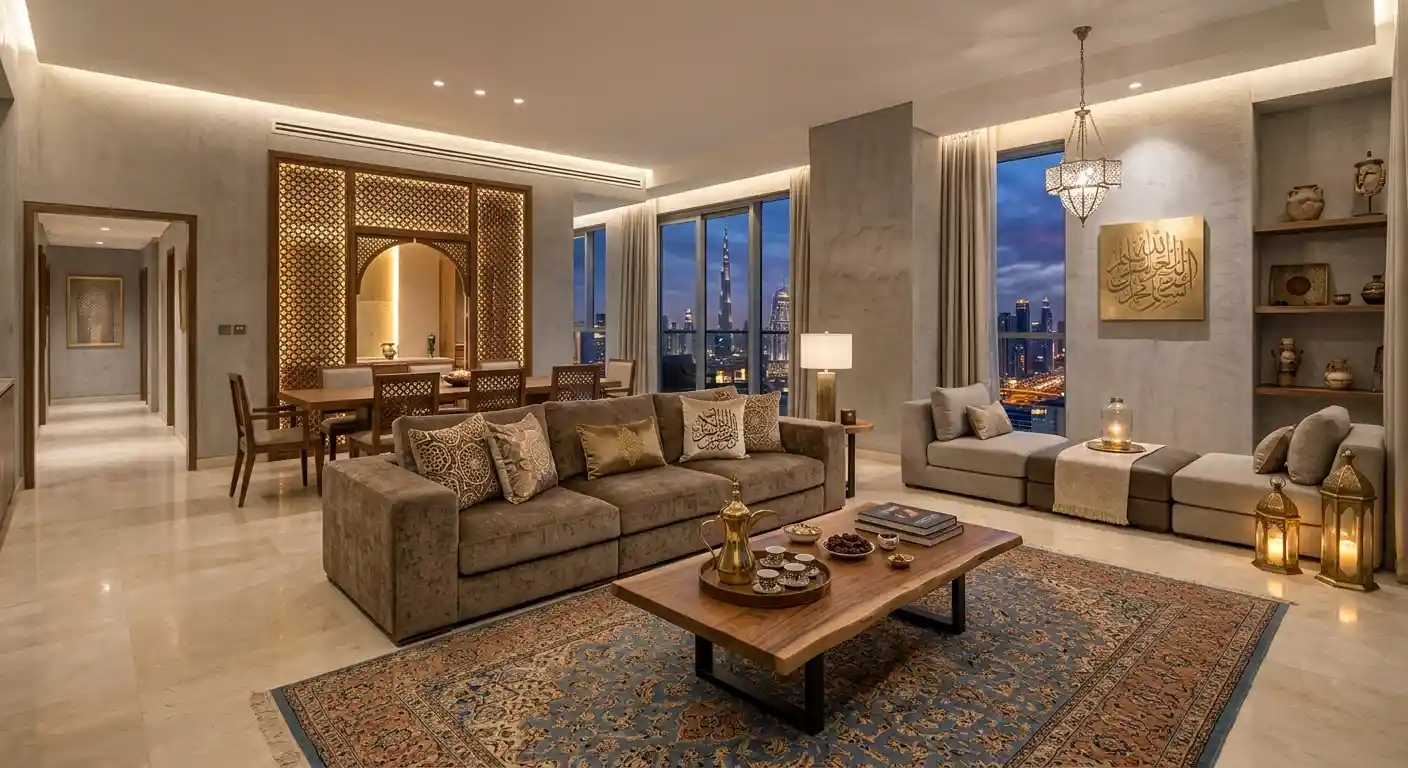
Contemporary Arabian interior design brings together the architectural character of the Middle East and the practical requirements of modern living. In Dubai, this approach allows homeowners to retain a connection to regional heritage while creating interiors that feel current, comfortable and suited to the city’s varied residential architecture.
Rather than recreating traditional interiors, contemporary Arabian design draws on familiar elements such as geometric patterns, natural materials, crafted details and considered proportions. These features can be reinterpreted through modern layouts, restrained colour palettes and carefully selected furnishings. The result is a home that reflects its cultural setting without feeling overly traditional.
Understanding Contemporary Arabian Interior Design
Arabian design has a long architectural and decorative history, with influences visible in courtyards, arches, carved screens, patterned surfaces and the use of light and shade. Luxury interior decor in Dubai brings these traditional influences together with modern layouts, refined materials and contemporary architectural features.
In a modern Dubai home, this might mean using an arched doorway as an architectural feature rather than repeating arches throughout the property. Geometric patterns could appear in a decorative partition, floor detail or bespoke joinery instead of covering every surface.
The key is to understand the purpose and character of traditional elements before introducing them into a contemporary setting. This helps create a balanced interior where regional references feel intentional.
Using Regional Materials and Finishes
Material selection plays an important role in creating a connection to Arabian design. Stone, timber, metal and textured plaster can introduce warmth and depth while remaining suitable for contemporary interiors.

Natural stone is particularly effective in entrance areas, living spaces and bathrooms. Marble and limestone can provide subtle surface variation, while travertine introduces a softer, more organic appearance. These materials can be used across floors, feature walls, countertops or bespoke furniture details.
Timber brings warmth to interiors that might otherwise feel dominated by stone, glass and metal. It can be introduced through wall panelling, cabinetry, screens and furniture. Darker timber tones may create a more traditional atmosphere, while lighter finishes work well in minimal, contemporary spaces.
Metal details can also reference regional craftsmanship. Brushed brass, bronze and aged metal finishes can be incorporated into lighting, handles, furniture legs and decorative features. Using these finishes selectively prevents them from becoming overly decorative.
Textured plaster is another useful option. Applied to selected walls, it creates a soft, tactile surface that works well with neutral colours and natural materials. It can also provide visual interest without relying on elaborate decoration.
Incorporating Arabian Patterns and Architectural Details
Geometric patterns are among the most recognisable features of Arabian decorative design. Their use in contemporary interiors requires careful consideration of scale, placement and material.
Instead of applying intricate patterns across large areas, designers can use them as focused details. A geometric metal screen, for example, can separate spaces while allowing light and air to pass through. It can also provide privacy without creating a completely enclosed room.
Other ways to introduce regional patterns include:
- Decorative screens: Use patterned timber or metal partitions to define areas within open-plan layouts.
- Flooring details: Introduce geometric stone inlays in entrance halls or transitional spaces.
- Wall features: Apply subtle patterns through textured finishes, carved panels or bespoke joinery.
- Lighting: Choose lantern-inspired fittings with contemporary shapes and restrained detailing.
- Textiles: Use cushions, rugs and upholstery with geometric motifs to introduce pattern without making the overall scheme feel busy.
Architectural forms can also provide a connection to regional design. Arches, recessed niches and curved openings can soften modern interiors and create visual interest. However, these details should relate to the proportions and layout of the property rather than being added purely for decoration.
Creating a Contemporary Arabian Colour Palette
Colour can help establish the atmosphere of a contemporary Arabian interior. Traditional influences often include warm earth tones, deep natural colours and finishes inspired by the surrounding landscape.
Sand, beige, cream and warm white provide a versatile foundation. These shades work well with natural stone and timber, while helping rooms feel open and calm. They are particularly suitable for Dubai homes with generous natural light.
Deeper colours can be introduced through selected furniture, artwork and accessories. Terracotta, olive green, muted gold and rich brown can add depth without overwhelming the space. Navy or deep teal may also work as accent colours, particularly in formal living areas or private rooms.
The balance between light and dark finishes is important. A room with pale stone flooring and warm neutral walls might benefit from darker timber furniture or bronze details. This creates contrast while maintaining a cohesive appearance.
Lighting should also be considered when selecting colours. Strong daylight can change how finishes appear throughout the day, while artificial lighting affects the atmosphere in the evening. Testing materials and paint samples within the actual space helps ensure that the chosen palette works under different conditions.
Balancing Regional Character with Modern Living
A successful contemporary Arabian interior should reflect the way residents use their homes. Formal entertaining areas, family spaces and private rooms may each require a different approach to layout and decoration.
In a majlis-inspired reception room, for example, comfortable seating can be arranged to encourage conversation while retaining a contemporary furniture profile. Traditional references might appear through a patterned screen, decorative lighting or carefully selected textiles.
Family living areas may benefit from simpler finishes, practical storage and durable upholstery. Here, regional character can be introduced through materials, artwork and smaller decorative details rather than elaborate architectural features.
Outdoor spaces also offer opportunities to connect interior design with the local environment. Shaded terraces, courtyards and landscaped seating areas can extend the living space beyond the main building. Where the architecture allows, consistent flooring, complementary materials and carefully positioned glazing can strengthen the relationship between indoor and outdoor areas.
In Dubai, these spaces should be planned with the climate in mind. Shading, suitable outdoor materials and appropriate planting are important considerations, particularly where areas are exposed to direct sunlight and high temperatures.
Bringing the Design Together
Contemporary Arabian interiors are most effective when regional references are integrated into the overall architectural and decorative scheme. Introducing too many patterns, ornate details or contrasting finishes can make a space feel disconnected. A more considered approach allows a smaller number of features to establish the character of the home.
This may involve combining natural stone with warm timber, using a geometric screen to define an open-plan space, or introducing handcrafted lighting against a simple architectural backdrop. Each element should contribute to the room’s function as well as its appearance.
Ultimately, a successful interior design company in Dubai can draw on the region’s architectural heritage while responding to contemporary expectations of comfort, practicality and simplicity. By selecting materials, patterns and architectural details with care, homeowners can create interiors that feel connected to their surroundings while remaining relevant to modern life.